Showing posts with label Region: Mideast. Show all posts

September 26. Story of the Day: Abraham and Nimrod

This is a passage from the Jewish Encyclopedia article on Abraham (1906, online); see the Encyclopedia for the sources of the story. You can read more about the legends of both Abraham and Nimrod at Wikipedia also.

This story is classified as ATU 2031B. Abraham learns to worship God, where you will find also another Jewish legend plus a version of this story from the Koran.

Looking for more stories? Click here for previous Stories-of-the-Day.


ABRAHAM AND NIMROD


Terah was a manufacturer of idols and had them for sale. One day when Terah was absent and Abraham was left to take charge of the shop, an old, yet vigorous, man came in to buy an idol. Abraham handed him the one on top, and he gave him the price asked. "How old art thou?" Abraham asked.

"Seventy years," was the answer.

"Thou fool," continued Abraham, "how canst thou adore a god so much younger than thou? Thou wert born seventy years ago and this god was made yesterday."

The buyer threw away his idol and received his money back.

The other sons of Terah complained to their father that Abraham did not know how to sell the idols, and so Abraham was told to attend to the idols as priest.

One day a woman brought a meal-offering for the idols, and, as they would not eat, he exclaimed: "A mouth have they but speak not, eyes but see not, ears but hear not, hands but handle not. May their makers be like them, and all who trust in them," and he broke them to pieces and burned them.

Abraham was brought before Nimrod, who said: "Knowest thou not that I am god and ruler of the world? Why hast thou destroyed my images?"

Then Abraham said: "If thou art god and ruler of the world, why dost thou not cause the sun to rise in the west and set in the east? If thou art god and ruler of the world, tell me all that I have now at heart, and what I shall do in the future." Nimrod was dumfounded, and Abraham continued: "Thou art the son of Cush, a mortal like him. Thou couldst not save thy father from death, nor wilt thou thyself escape it."

Nimrod said: "Worship the fire!"

"Why not water that quenches the fire?" asked Abraham.

"Very well, worship the water!"

"Why not the clouds which swallow the water?"

"So be it; worship the clouds!"

Then Abraham said: "Rather let me adore the wind which blows the clouds about!"

"So be it; pray to the wind!"

"But," said Abraham, "man can stand up against the wind or shield himself behind the walls of his house."

"Then adore me!" said Nimrod.

Thereupon Nimrod ordered Abraham to be cast into a furnace. He had a pile of wood five yards in circumference set on fire, and Abraham was cast into it. But God Himself went down from heaven to rescue him. Wherefore the Lord appeared to him later, saying: "I am the Lord who brought thee out of the fire of the Chaldeans."


July 14. Story of the Day: Susku and Mushu

This is another story from Persian Tales by D.L.R. Lorimer and E.O. Lorimer with illustrations by Hilda Roberts, and you will see the same story opening formulas and closing formulas here as in the other stories I've taken from this book: The Fox's Pilgrimage to Mecca and The Mouse's Tail.

Watch out for the two uses of "ash" in this story: there is the usual English word ashes, but also Persian ash, which is a type of stew. You can find out more about ash at Wikipedia.

This type of story is classified as ATU 2023. Little Ant Marries, but it also shares the story motif of the chain of mourners with the related type: ATU 2022 The Death of the Little Hen. Storytellers are very adept at the mixing-and-matching of motifs. That makes a muddle of the folktale classifications schemes, but it also leads to all kinds of new stories!

And for yet more stories, you can click here for previous Stories-of-the-Day.


SUSKU AND MUSHU


Once upon a time there was a time when there was no one but God.

There was a Mouse who was called Mushu, and a little Beetle whose name was Susku. Susku was going along one day dressed up in her very best clothes when Master Mousie came out of his hole just in front of her, and said: "Whither away, with your cotton chader and your silken vest and your golden heels?"

"I'm going off to get married, and to get married, and to eat only the finest white bread," answered she, "and to ask no favour of any man."

Then Mushu asked: "Would you marry me?"

"Well," said Susku, "if I marry you, what will you put me to sleep on?"

"On a basket of dates."

"Oh," cried she, "now, just look, how could any one sleep on anything so sticky-wicky?"

"Then I'll put you to sleep on a skin of clarified butter."

"But now, how could any one sleep on anything so greasy-weasy?"

"All right, then, I'll put you to sleep on a sack of walnuts."

"But how could any one sleep on anything so nobbly-wobbly?"

"Well, then," said Master Mousie, "I'll put you to sleep in my own little arms."

And Susku said: "Right you are."

Then she asked: "And when we quarrel what will you beat me with?"

"With the pole of the weighing-machine."

"I'll die," said Susku.

"Then," said Mushu, "I'll beat you with my own little tail."

And Susku said: "Right you are."

When they had agreed about this Susku went off to the bath. As she was coming out and was just crossing a little stream, she fell in. There was a farmer-man there who was managing the irrigation and watching the flow of the water.

Susku called out to him: "Hullo, brother, run to Master Mousie and tell him that his lover and his sweetheart is in the water, and say: 'Bring a little ladder of gold and take your sweetheart out of the water.'"

So off went the farmer and told Mushu. Master Mousie ran to the door of the greengrocer's shop and stole two carrots, and with his little teeth he cut them up and carved them out and made a little ladder of gold and carried it to the stream. And he pulled Susku up out of the water, and they got married, and he was her husband and she was his wife. And Master Mousie carried her off to his home.

One day he said: "Wife, I want some nice ash. Go and cook me a little." As soon as he had gone out Susku made the broth and put the pot on the fire and cut up some fine strips of dough and went to put them in it, but the wind came and lifted her up in the air and threw her down into the pot of ash. When poor Mushu came home he saw that Susku had fallen into the pot of broth and been drowned. And so full of sorrow was he that he went to the fireplace and began to throw ashes on his head.

Just then a crow happened to pass that way and said to Master Mousie: "What's the matter with you?" and he said: "Haven't you heard?
Susku fell into the pot
And Mushu poured ashes on his head."

And the crow said: "Oh, I am so sorry," and gave himself a shake and shook all his feathers out and went and sat on a tree.

And the tree asked: "Crow, why have you shaken your feathers out?"

"Haven't you heard?
Susku fell into the pot,
Mushu poured ashes on his head,
And the crow shook his feathers out."

The tree said: "Oh, I am so sorry," and gave herself a shake and shed all her leaves.

The waters came to the foot of the tree to water her. They asked: "Tree, why have you shed your leaves?"

"Haven't you heard?
Susku fell into the pot,
Mushu poured ashes on his head,
The crow shook his feathers out,
And the tree shed her leaves."

The waters said: "Oh, we are so sorry," and they turned all muddy, and went out into the desert to water the corn. The corn asked: "Waters, why are you all muddy?"

"Haven't you heard?
Susku fell into the pot,
Mushu poured ashes on his head,
The crow shook his feathers out,
The tree shed her leaves,
And the waters turned muddy."

Then the stalks of corn said: "Oh, we are so sorry," and they put their heads on the ground and their feet in the air.

The farmer happened to pass that way; he asked: "O stalks of corn, what are you all doing, standing on your heads?"

"Haven't you heard?
Susku fell into the pot,
Mushu poured ashes on his head,
The crow shook his feathers out,
The tree shed her leaves,
The waters turned muddy,
And the stalks of corn stood on their heads."

Then the farmer said: "Oh, I am so sorry," and he fixed his spade in the ground and ran the handle of it right through his body.


The farmer's daughter was bringing his dinner out to him, and she said: "Daddy, how did you get like this?"

"Haven't you heard?
Susku fell into the pot,
Mushu poured ashes on his head,
The crow shook his feathers out,
The tree shed her leaves,
The waters turned muddy,
The stalks of corn stood on their heads,
And the farmer drove a spade through his body."

Then the farmer's daughter, who had a dish of curds in her hand, said: "Oh, I am so sorry," and threw the curds all over herself and ran to her mother.

Her mother was sitting beside the griddle cooking griddle-cakes, and she said: "Darling, what have you done?"

"Haven't you heard?
Susku fell into the pot,
Mushu poured ashes on his head,
The crow shook his feathers out,
The tree shed her leaves,
The waters turned muddy,
The stalks of corn stood on their heads,
The farmer drove a spade through his body,
And your daughter was covered with curds."

Then her mother said: "Oh, I am so sorry," and cut off her two thumbs and threw them on the griddle, and they became griddle-cakes.

And now my story has come to an end, but the sparrow never got home.


July 11. Story of the Day: The Barber's Fifth Brother

This episode comes from the Arabian Nights as rendered by Isabel, Lady Burton, wife of Sir Richard Burton. You can read more about Lady Burton at Wikipedia.

This is the most elaborate example that I know of ATU 1430 Air Castles in which the daydreamer imagines a chain of events, one leading to another, ever up the social ladder... until reality intrudes again at the end.

In addition to this very detailed account of the brother's daydreaming, the story goes on to narrate the brother's further adventures; you can read that online at Internet Archive.

Looking for more stories? Click here for previous Stories-of-the-Day.


THE BARBER'S TALE OF HIS FIFTH BROTHER

My fifth brother Al-Nashshar, the Babbler, the same who was cropped of both ears, O Commander of the Faithful, was an asker wont to beg of folk by night and live on their alms by day. Now when our father, who was an old man well stricken in years, sickened and died, he left us seven hundred dirhams whereof each son took his hundred; but, as my fifth brother received his portion, he was perplexed and knew not what to do with it. While in this uncertainty he bethought him to lay it out on glassware of all sorts and turn an honest penny on its price. So he bought an hundred dirhams worth of verroterie and, putting it into a big tray, sat down to sell it on a bench at the foot of a wall against which he leant back. As he sat with the tray before him he fell to musing and said to himself:

Know, O my good Self, that the head of my wealth, my principal invested in this glassware, is an hundred dirhams.

I will assuredly sell it for two hundred, with which I will forthright buy other glass and make by it four hundred; nor will I cease to sell and buy on this wise, till I have gotten four thousand and soon find myself the master of much money.

With these coins I will purchase merchandise and jewels and attars (perfumes), and gain great profit on them; till, Allah willing, I will make my capital a hundred thousand dirhams.

Then I will purchase a fine house with white slaves [from the Caucasus] and eunuchs and horses; and I will eat and drink and disport myself; nor will I leave a singing man or a singing woman in the city, but I will summon them to my palace and make them perform before me.

All this he counted over in his mind, while the tray of glassware, worth an hundred dirhams, stood on the bench before him; and, after looking at it, he continued:

And when, Inshallah! my capital shall have become one hundred thousand dinars, I will send out marriage brokeresses to require for me in wedlock the daughters of Kings and Wazirs.

And I will demand to wife the eldest daughter of the Prime Minister; for it hath reached me that she is perfect in beauty and prime in loveliness and rare in accomplishments.

I will give a marriage-settlement of one thousand dinars; and, if her father consent, well: but if not I will take her by force from under his very nose.

When she is safely homed in my house, I will buy ten little eunuchs and for myself a robe of the robes of Kings and Sultans; and get me a saddle of gold and a bridle set thick with gems of price.

Then I will mount with the Mamelukes preceding me and surrounding me, and I will make the round of the city, whilst the folk salute me and bless me; after which I will repair to the Wazir (he that is father of the girl), with armed white slaves before and behind me and on my right and on my left.

When he sees me, the Wazir stands up, and seating me in his own place sits down much below me; for that I am to be his son-in-law.

Now I have with me two eunuchs carrying purses, each containing a thousand dinars ; and of these I deliver to him the thousand, his daughter's marriage-settle- ment, and make him a free gift of the other thousand, that he may have reason to know my generosity and liberality and my greatness of spirit and the littleness of the world in my eyes.

And for ten words he addresses to me I answer him two.

Then back I go to my house, and if one come to me on the bride's part, I make him a present of money and throw on him a dress of honour; but if he bring me a gift, I give it back to him and refuse to accept it, they may learn what a proud spirit is mine which never condescends to derogate. Thus I establish my rank and status.

When this is done I appoint her wedding night and adorn my house showily! gloriously!

And as the time for parading the bride is come, I don my finest dress and sit down on a mattress of gold brocade, propping up my elbow with a pillow, and turning neither to the right nor to the left; but looking only straight in front for the haughtiness of my mind and the gravity of my understanding.

And there before me stands my wife in her raiment and ornaments, lovely as the full moon; and I, in my loftiness and dread lordliness, 1 will not glance at her till those present say to me, "O our lord and our master, thy wife, thy handmaid, standeth before thee; vouchsafe her one look for standing wearieth her."

Then they kiss the ground before me many times; whereupon I raise my eyes and cast at her one single glance and turn my face earthwards again.

Then they bear her off to the bride-chamber, and I arise and change my clothes for a far finer suit; and, when they bring in the bride a second time, I deign not to throw her a look till they have begged me many times; after which I glance at her out of the corner of one eye, and then bend down my head. I continue acting after this fashion till the parading  and displaying are completed.

Thereupon I order one of my eunuchs to bring me a bag of five hundred dinars which I give as largesse to the tirewomen present and bid them one and all lead me to the bride-chamber.

When they leave me alone with her I neither look at her nor speak to her, but sit with my face to the wall showing my contempt, that each and every may again remark how high and haughty I am.

Presently her mother comes in to me; and kissing my head and hand, says to me,  "O my lord, look upon thine handmaid who longs for thy favour; so heal her broken spirit!"

I give her no answer ; and when she sees this she rises and kisses my feet many times and says, " O my lord, in very sooth my daughter is a beautiful maid, and if thou show her this backwardness and aversion, her heart will break; so do thou incline to her and speak to her and soothe her mind and spirit."

Then she rises and fetches a cup of wine; and says to her daughter, "Take it and hand it to thy lord."

But as she approaches me I leave her standing between my hands and sit, propping my elbow on a round cushion embroidered with gold thread, leaning lazily back, and without looking at her in the majesty of my spirit, so that she may deem me indeed a Sultan and a mighty man.

Then she says to me, "O my lord, Allah upon thee, do not refuse to take the cup from the hand of thine handmaid, for verily I am thy bondswoman."

But I do not speak to her and she presses me, saying, "There is no help but that thou drink it;" and she puts it to my lips.

Then I shake my fist in her face and kick her with my foot thus...

So he let out with his toe and knocked over the tray of glassware which fell to the ground and, falling from the bench, all that was on it was broken to bits.

"O foulest of fools, this comes from the pride of my spirit!" cried my brother; and then, O Commander of the Faithful, he buffeted his face and rent his garments, and kept on weeping and beating himself. The folk who were flocking to their Friday prayers saw him; and some of them looked at him and pitied him, whilst others paid no heed to him, and in this way my brother lost both capital and profit.


NOTES

Al-Nashshar from Nashr = sawing: so the fiddler in Italian is called the "village-saw" (Sega del villagio). He is the Alnaschar of Galland, Addison and Richardson.

The tale is very old. It appears as the Brahman and the Pot of Rice in the Panchatantra ; and Professor Benfey believes (as usual with him) that this, with many others, derives from a Buddhist source. But I would distinctly derive it from Aesop's market-woman who kicked over her eggs, for reasons given in the Terminal Essay. In the " Kalilah and Dimnah" and its numerous offspring it is the "Ascetic with his Jar of Oil and Honey;" in Rabelais (i. 33) Echephron's shoemaker spills his milk, and so La Perette in La Fontaine. Hence, too, the Latin proverb, "Ante victoriam canere Iriumphum" = to sell the skin before catching the bear; to count your chickens before they're hatched. See M. Max Muller's "Chips," vol. iii., appendix. The curious reader will compare my version with that which appears at the end of Richardson's Arabic Grammar (Edition of 1811): he had a better, or rather a fuller MS. (p. 199) than any yet printed, the property of Sir W. Jones.

July 10. Story of the Day: The Mouse's Tail

This is another story from Persian Tales by D.L.R. Lorimer and E.O. Lorimer. It is an example of ATU 2034. The Mouse Regains its Tail... although in this version, the mouse has not regained his tail by the story's end! Instead, the story ends abruptly with a story-ending formula that occurs in many of the Persian tales. The actual chain could either go on and on, or we could imagine that the blacksmith might comply, allowing the poor mouse to work her way on back down to the start of the chain, with the cobbler sewing the tail back on.

The story makes reference to the Jews of Iran, and you can find out more about the Persian Jews at Wikipedia. The story also makes reference to Gypsies, the Roma people, who have also lived in Iran for many centuries. You can read in Wikipedia about the legend from the Persian epic Shahnameh about how the Roma came to Iran.

Looking for more stories? Click here for previous Stories-of-the-Day. You can also find several other stories from Lorimer's Persian Tales!


THE SAD TALE
OF THE MOUSE'S TAIL


Once upon a time there was a time when there was no one but God.

The Mouse went out a-stealing and fell into a trap, and her tail got torn off.

Away she went to the Cobbler and said:
Cobbler, Cobbler, sew on my tail!

The Cobbler said: "Run away and bring me some thread so that I can sew on your tail."

The Mouse ran to the Jew and said:
Jew, Jew, give me a thread
To give to the Cobbler to sew on my tail.

"Bring me an egg," said the Jew, "and I'll give you a thread."

So she came to the Hen and said:
Tutoo, Tutoo, give me an egg
To give to the Jew, who'll give me a thread
To give to the Cobbler to sew on my tail.

The Hen said: "Go and bring me a grain of corn and I'll give you an egg."

So she came to the Corn Heap and said:
Corn Heap, Corn Heap, give me a grain
To give to the Hen, who'll give me an egg
To give to the Jew, who'll give me a thread
To give to the Cobbler to sew on my tail.

"Bring me a sieve," said the Corn Heap, "so that I can get you a grain of corn."

So she came to the Tinker and said:
Gipsy, Gipsy, give me a sieve
To give to the Corn Heap, who'll give me a grain
To give to the Hen, who'll give me an egg
To give to the Jew, who'll give me a thread
To give to the Cobbler to sew on my tail.

"Go and bring me a goat-skin," said the Tinker, "so that I may make a sieve for you."

So she came to the Goat and said:
Goat, Goat, give me a skin
To give to the Tinker, who'll make me a sieve
To give to the Corn Heap, who'll give me a grain
To give to the Hen, who'll give me an egg
To give to the Jew, who'll give me a thread
To give to the Cobbler to sew on my tail.

The Goat said: "Go and bring me some grass, and I'll give you a skin."

So she came to the Farmer and said:
Farmer, Farmer, give me some grass
To give to the Goat, who'll give me a skin
To give to the Tinker, who'll make me a sieve
To give to the Corn Heap, who'll give me a grain
To give to the Hen, who'll give me an egg
To give to the Jew, who'll give me a thread
To give to the Cobbler to sew on my tail.

"Go and bring me a spade," said the Farmer, "so that I can dig you up some grass."

So she came to the Blacksmith and said:
Blacksmith, Blacksmith, give me a spade
To give to the Farmer, who'll give me some grass
To give to the Goat, who'll give me a skin
To give to the Tinker, who'll make me a sieve
To give to the Corn Heap, who'll give me a grain
To give to the Hen, who'll give me an egg
To give to the Jew, who'll give me a thread
To give to the Cobbler
TO SEW ON MY TAIL!

And now my story has come to an end, but the sparrow never got home.


CHAIN: cobbler/thread - Jew/egg - hen/grain - heap/sieve - tinker/skin - goat/grass - farmer/space - blacksmith

July 2. Story of the Day: Beetle, Mouse, and Ant.

This is another story from Persian Tales by D.L.R. Lorimer and E.O. Lorimer with illustrations by Hilda Roberts.

This is classified as ATU 2023. Little Ant Marries. In this case, though, there are two brides: the beetle and the ant! Things do not turn out well for either of them, alas.

You will see a few Persian words in the story. For example, when the beetle dresses herself up, she calls herself "Naazi," which means "cute" (and the mouse is named Ramazan, and he lives in Hamadan in western Iran). Another Persian word you will meet in the story is sowaar, a member of the cavalry; more at Wikipedia.

Looking for more stories? Click here for previous Stories-of-the-Day.


THE SAD STORY OF THE BEETLE,
THE MOUSE, AND THE ANT

There was once a Black Beetle who said to herself, "Why do I stay here? I'll go and visit the Mouse and marry him."

She started off and began walking along the road, and on her way she came to an old camping-ground. There she found a piece of goat's-hair webbing and she put it on as side-locks, and the skin of an onion she made into a chader.

Thus adorned, she went on her way, and presently she saw a man coming along riding on a cow.

He called to her, "Mistress Beetle, where are you going and where are you coming from?"

"May you become a beetle!" cried she. "May you become mud! May you be lost off the face of the earth that is no way to speak to me! They address me as: Sister Naazi, onion-veil, webbing-locks, forty-plaits!"

"Very good, Sister Naazi, onion-veil, webbing-locks, forty-plaits, where are you going and where have you come from?"

She answered, "I'm going to Hamadan to marry Ramazan. I shall eat wheaten cakes and worry his beard."

"Won't you come and go along with me then?" said he.

"What will you mount me on?"

"I'll mount you on my yellow cow," said he.

"It mustn't kick and buck, then, and break my delicate arms and legs."

"Oh, all right, don't come, then."

On went Sister Naazi, and on and on, and came to a certain place, and saw that a man was coming along riding on a mule.

"Mistress Beetle, where have you been and where are you going?" asked he.

"May you become a beetle!" cried she. "May you become mud! may you be lost off the face of the earth! Say: Sister Naazi, onion-veil, webbing-locks, forty-plaits, where are you coming from and where are you going to?"

"Very well, Sister Naazi, onion-veil, webbing-locks, forty plaits, where are you coming from and where are you going to?"

"I'm going to Hamadan, I am going to marry Ramazan. I shall eat wheaten cakes and worry his beard."

"Come along, I'll give you a mount and take you on your way," said the man.

"What will you mount me on?"

"On a mule."

"It mustn't kick and buck and break my delicate arms and legs."

"Very well," said he, "you know best," and he rode on without her.

She went on and on till she came to the mark of a cow's hoof. By chance she fell into it, and however much she tried she couldn't get up out of it again.

Just then some mounted men came riding along past her, and she called out, "O sowaars, you who are riding along, I hear the clatter of your horses' hoofs, and there is a greyhound with you; say to the Mouse, say to the Mouse with two teeth, say to the Terror of the Flourbag: Sister Naazi, onion-veil, webbing locks, forty-plaits has fallen into a pit, come and get her out."

The sowaars said, "Very good," and rode on, and they came to the Mouse's hole and told him all about it.

Master Mouse set out to the rescue, and came to the place and saw Sister Naazi lying at the bottom of a pit.

"Give me your hand," said he.

"You mustn't break my arm."

"Give me your leg, then," said he.

"You mustn't break my leg."

"Very well," said he, "then catch hold of my tail with your hand and climb up to the top."

She did so, and he said to her, "Get up and ride on my tail."

She mounted his tail and they went on towards Hamadan.

"Now wait here, my dear," said Master Mouse, "while I go on to find some food and bring it back, so that we may have something to live on."

"Off with you," said she.

But Master Mouse remained away for several days.

Now Mistress Ant was in that neighbourhood, and he said to her, "O Ant, won't you marry me?"

"No," said she.

Somehow or other, however, he got her consent at last, and took her as his wife.

Then he said, "Wife, you just stay here where you are till I come back."

"Very well," said she.

When he came home again, Mistress Beetle got very angry. She said, "You went off and married a wife."

But he took oath, saying, "If I have married a wife, may this head of mine be pulled off, and may a dog eat you!"

For all he could say, however, she wouldn't believe him, and she went off and flung herself into a puddle of water and drowned herself.

When Master Mouse came back, he saw that Sister Naazi, onion-veil, webbing-locks, forty-plaits had thrown herself into a water-hole and was drowned.

Then he went off to keep his appointment with Mistress Ant.

He took some sheep's trotters with him, and brought them and put them in a big pot on the fire, and said, "Wife, Companion of my Nights and Days, don't take the lid off this pot till I come back." With that he went off and was a long time in returning.

Mistress Ant, seeing that her husband hadn't come, went and lifted the lid off the pot, but then as she was trying to take out the trotters she herself fell in and was drowned, and her body was swollen up with the water.

Master Mouse came back presently, and not seeing his wife, said, "Mistress Ant isn't here. I'll just take out my share of the trotters and eat it." Then he went to the pot, and there he found Mistress Ant all swollen up with the water.

He beat his head and said:
"Dust on the head of the Mouse!
The water has killed Mistress Ant."


Then he went off and came under a tree.

"What's the matter with you?" said the tree, and he replied:
"Dust on the head of the Mouse!
The water has killed Mistress Ant."

Thereupon the tree shed its leaves. A crow came and alighted on the tree, and said, "O tree, what's the matter with you ? "

The tree replied :
"The tree has shed its leaves,
Dust on the head of the Mouse!
The water has killed Mistress Ant."

Thereupon the crow moulted all his feathers and went to a spring to drink water. The spring inquired, "O crow, every day you have come here with feathers on, what's the matter with you to-day ? "

The crow replied:
"The crow has moulted,
The tree has shed its leaves,
Dust on the head of the Mouse!
The water has killed Mistress Ant."

Then the spring became all bloody. Some ibex came to the spring and saw that it was all red. "O spring," they asked, "what is the matter with you? We have come here every day, and you have been nice and clear, but to-day we see that you have become all bloody."

The spring replied:
"The spring has become all bloody,
The crow has moulted,
The tree has shed its leaves,
Dust on the head of the Mouse!
The water has killed Mistress Ant."

The ibex did not drink the water; they each dropped one horn and then went off to graze and came to Master Hare. "Why have you become like this?" asked he, and they replied :
"The ibex have each dropped a horn,
The spring has become all bloody,
The crow has moulted,
The tree has shed its leaves,
Dust on the head of the Mouse!
The water has killed Mistress Ant."

Then the hare cut off his tail and went and lay down among the corn. An old man came up and saw the hare with his tail cut off.

"Master Hare," said he, "every day when you came among the corn you had a tail. Today I see you have none; what has happened?"

The hare replied:
"The hare has cut off his tail,
The ibex have each dropped a horn,
The spring has become all bloody,
The crow has moulted,
The tree has shed its leaves,
Dust on the head of the Mouse!
The water has killed Mistress Ant."

The old man stuck a spade through his body and went off to his house. His wife was going along the road to get a griddle from her neighbours, and she saw the old man coming towards her.

"Grandfather," said she, " what on earth's the meaning of this? What game are you playing at? Why have you stuck the spade through your body?"

He replied :
"Grandpa has stuck a spade through his body,
The hare has cut off his tail,
The ibex have each dropped a horn,
The spring has become all bloody,
The crow has moulted,
The tree has shed its leaves,
Dust on the head of the Mouse!
The water has killed Mistress Ant."

Then the wife threw the griddle round her neck and went into the house. The people in the house said, "Woman, have you gone mad? Why have you thrown the griddle round your neck?"

She replied:
"Auntie has thrown the griddle round her neck,
Grandpa has stuck a spade through his body,
The hare has cut off his tail,
The ibex have each dropped a horn,
The spring has become all bloody,
The crow has moulted,
The tree has shed its leaves,
Dust on the head of the Mouse!
The water has killed Mistress Ant."

Then these people too got up and they pulled down the house and ran away, and they came to see the corpse of Mistress Ant, and raised great mourning and lamentation, and they buried her to the sound of music and of drums.

Then every one went straight off on his own way, and they became wanderers on the face of the earth out of grief for Mistress Ant.


June 26. Story of the Day: The Fox's Pilgrimage to Mecca

Today's story comes from Persian Tales by D.L.R. Lorimer and E.O. Lorimer with illustrations by Hilda Roberts.

You will see references here to King Suleman (Solomon), the son of King David, who is a key figure in Islamic folklore. There is more about Suleman at Wikipedia, and you can read about the hoopoe and Suleman at Wikipedia also.


This is ATU 20 Animals Flee - Animals on a Pilgrimage, "the animals on a pilgrimage," and it also features some other familiar folktale motifs. Of the birds who join the fox on the pilgrimage, it is the wise hoopoe who outfoxes the fox in the end.

Looking for more stories? Click here for previous Stories-of-the-Day.


THE FOX'S PILGRIMAGE TO MECCA

Once upon a time there was a time when there was no one but God.

There was a Fox who went one day into a reed-brake to play, and in playing he broke one of the reeds. He took it and put it over his shoulder like a pilgrim's staff and walked off.

A Cock happened to be standing on the edge of a wall, busy praising God by reciting His name aloud. When he caught sight of the Fox, he cried, "Hullo, Master Fox! What play-acting is this? What have you put a pilgrim's staff on your shoulder for?"

The Fox replied, "Nay, then, thou Muezzin of God who callest the Faithful to prayer, this is no playacting nor conjuring trick. Those evil deeds which you saw and which I used to do of old, I have renounced them all. I am now going on a pilgrimage to Mecca.
To the House of God I make my way,
There to worship and there to pray.
Though of old I did evil and went astray,
I repent, and turn from the world away.
Never again shall I steal or thieve
Or plunder the hen-roosts as long as I live.
The estate of my father lies in my hand,
In peace and in virtue I'll live on my land."

(illustration by Hilda Roberts)

The silly idiot of a cock was taken in by these pious words, and said, "O, Master Sheikh, I long to go with you on your pilgrimage."

"Very well," said the Fox, "you will be most welcome. Pray come, and let us set out."

So the Cock flew down and started off in company with the Fox. When they had travelled some little distance they came to the bank of a river. A Waterfowl was swimming about in the river, and when she saw the Cock coming along with the Fox she made her voice heard from the water, "O, thou Muezzin of God, hast thou forgotten to chant the praise of God that thou art thus fallen into the power of that base-born Fox?"

The Cock replied, "Nay, it is not as you think:
To the House of God he makes his way,
There to worship and there to pray.
Though of old he did evil and went astray,
He repents and turns from the world away.
Never again will he steal or thieve
Or plunder the hen-roosts while he shall live.
The estate of his father lies in his hand,
In peace and in virtue he'll live on his land."

The Waterfowl cried, "If that is the state of affairs, I should like to go with you both on this pilgrimage," and she came out of the water and joined them, and they travelled on all three together.

After they had gone some little way they came to a garden where a Hoopoe was sitting on the branch of a tree. When she saw the Cock and the Waterfowl coming along with the Fox she made her voice heard from the tree, "What extraordinary fools you are! I wonder what sin you have committed to have fallen into the clutches of the base-born Fox!"

But the Waterfowl said, "Nay, thou Messenger of the Prophet Suleman, things are not as you think:
To the House of God he makes his way,
There to worship and there to pray.
Though of old he did evil and went astray,
He repents and turns from the world away.
Never again will he steal or thieve
Or plunder the hen-roosts while he shall live.
The estate of his father lies in his hand,
In peace and in virtue he'll live on his land."

"Then," cried the Hoopoe, "if that is so, I should like to come with you all on your pilgrimage."

"Welcome in the name of God!" said they. So the Hoopoe flew down and started off with them.

On and on they travelled till they reached the door of the Fox's hole. When they caught sight of the hole they saw feet and paws and birds' feathers scattered about and piled into heaps, and they all began to tremble with terror. The Fox saw this and said, "Nay, do not fear, since I renounced the evil of the world I have not harmed a single bird. Come now and sleep here, be my guests tonight, and we shall start out early tomorrow morning."

So they went into the Fox's earth and passed the night as best they might. As soon as it was day the Fox rose up and first called the Cock. He came, and the Fox addressed him, "Do you remember when you were on the roof-top what curses you hurled at me and how you made fun of me?"

The Cock began to beg and implore, "O, Master Sheikh, I am God's Muezzin, calling the Faithful to prayer; I pray thee overlook my fault!"

"Very well, then," said the Fox, "but what right have you to climb up on to men's roof-tops, and, in the pretence that you are going to sound the Call to Prayer, cast your eyes upon their women-folk?"

"O, Master Sheikh, God created me for this sole purpose, that I should wake each dawn and sing to waken men that they should rise and pray."

The Fox cried, "Even if you yourself are one of the Faithful, at any rate your mother was no better than she should be!" And with that he ran in, and, seizing the Cock by the throat, strangled and ate him.

As soon as he had finished eating the Cock he called the Waterfowl. She also came. "Do you remember, when you made your voice heard from the water, what you said about me?" The poor bird began with apologies and tears to beg and implore him.

"Very well, I'll pass over that fault," said the Fox, "but how can I overlook this great sin? You go into the water and swim about and beat up the waters and defile them. Then comes a believer and wants to perform his ablutions before prayer, and finds the water all dirty and impure."

As he spoke he darted at the Waterfowl, and, seizing her throat, strangled and ate her.

Then he called up the Hoopoe, "Do you remember, when you were sitting on the branch of the tree, what senseless words you uttered? Whence do you get this fine name of yours, 'Messenger of the Prophet Suleman'? And how can you boast of the love which exists between you and the sons of men?"

"Well," said the poor Hoopoe,  you must admit that I was in charge of the water-wheels for the holy Suleman's army, and that I used to fly in the van and find water and camping-grounds for them."

"O, you son of a burnt father!" said the Fox, "if in very truth you have skill in finding water, let us see it now: find me some."

The Hoopoe alighted on the ground and began to peck at the earth with her beak to make water come forth, thereupon the Fox pounced on her from behind and made one mouthful of her. But from out of the Fox's mouth the Hoopoe raised her voice and said, "Master Fox, I have one piece of good advice to give you. Open your ears to it."

The Fox wanted to say, "Say on," but when he opened his mouth wide like a water-jar the Hoopoe flew off. As she was hurrying off she happened to pass an approaching army, and a Royal Falcon was flying in the van above them. The Hoopoe flew up to the Falcon and said, "Where are you off to?"

The Falcon answered, "O, Messenger of the Prophet Suleman, this army is marching forth on business."

"What business?" asked she.

"Our great King's daughter lies very ill,
And crowds of doctors surround her still.
This they prescribe with thought and with care:
The Gall of a Fox and the Heart of a Hare,
and now for three days we have been searching and have only just caught a hare, but so far we haven't lighted on a fox."

"That's all right," said the Hoopoe, "I've got a fox's earth close at hand. Come along and I'll show you."

Then the Hoopoe flew ahead and the Falcon and the horsemen followed behind till they came near the Fox's hole. The Hoopoe went to the mouth of it and called out, "Master Fox, you have shown me such great kindness that I am overwhelmed. Now I have come back to make you some return for it. There's a huge army coming along, and they'll certainly wreck your home. If you have any wish to save your life you must fly at once."

The Fox came to the door of his hole and saw that the Hoopoe was speaking the truth: the army was there all right. He tried to escape, but the horsemen saw him and loosed their hounds on him. He fled till he was weary, but at last the hounds overtook him and tore him to pieces. Then the horsemen came up and took his gall-bladder for the King's daughter.

And now my story has come to an end, but the sparrow never got home.


June 23. Story of the Day: Abraham and the Star, Moon, and Sun

This story of Abraham comes from the Quran, Surah 6, verses 74-79, which I have presented below in three different English translations. To learn more about Abraham in Islam, see Wikipedia.

This story is classified as ATU 2031B. Abraham learns to worship God (which is a subtype of the Stronger and Strongest class of stories). This story is not part of the Hebrew Bible, but it is part of Hebrew extra-Biblical tradition as you can see in these stories: The True Believer and Abraham and Nimrod.

Want more? Click here for previous Stories-of-the-Day.


ABRAHAM AND THE STAR, MOON, AND SUN


From Clear Quran:

74. Abraham said to his father Azar, “Do you take idols for gods? I see that you and your people are in evident error.”

75. Thus We showed Abraham the empire of the heavens and the earth, that he might be one of those with certainty.

76. When the night fell over him, he saw a planet. He said, “This is my lord.” But when it set, he said, “I do not love those that set.”

77. Then, when he saw the moon rising, he said, “This is my lord.” But when it set, he said, “If my Lord does not guide me, I will be one of the erring people.”

78. Then, when he saw the sun rising, he said, “This is my lord, this is bigger.” But when it set, he said, “O my people, I am innocent of your idolatry.

79. I have directed my attention towards Him Who created the heavens and the earth—a monotheist—and I am not of the idolaters.”


From the Wright House site:

74. Lo! Abraham said to his father Azar: "Takest thou idols for gods? For I see thee and thy people in manifest error."

75. So also did We show Abraham the power and the laws of the heavens and the earth, that he might (with understanding) have certitude.

76. When the night covered him over, He saw a star: He said: "This is my Lord." But when it set, He said: "I love not those that set."

77. When he saw the moon rising in splendour, he said: "This is my Lord." But when the moon set, He said: "unless my Lord guide me, I shall surely be among those who go astray."

78. When he saw the sun rising in splendour, he said: "This is my Lord; this is the greatest (of all)." But when the sun set, he said: "O my people! I am indeed free from your (guilt) of giving partners to Allah.

79. "For me, I have set my face, firmly and truly, towards Him Who created the heavens and the earth, and never shall I give partners to Allah."


From quran.com (which also has the Arabic text and audio):

74 And [mention, O Muhammad], when Abraham said to his father Azar, "Do you take idols as deities? Indeed, I see you and your people to be in manifest error."

75 And thus did We show Abraham the realm of the heavens and the earth that he would be among the certain [in faith]

76 So when the night covered him [with darkness], he saw a star. He said, "This is my lord." But when it set, he said, "I like not those that disappear."

77 And when he saw the moon rising, he said, "This is my lord." But when it set, he said, "Unless my Lord guides me, I will surely be among the people gone astray."

78 And when he saw the sun rising, he said, "This is my lord; this is greater." But when it set, he said, "O my people, indeed I am free from what you associate with Allah.

79 Indeed, I have turned my face toward He who created the heavens and the earth, inclining toward truth, and I am not of those who associate others with Allah."


Ginzberg. The True Believer

This story comes from Ginzberg's Legends of the Jews. It is a story about the patriarch Abraham and his father Terah. You can read more about the Biblical and extra-Biblical legends of Abraham and Terah at Wikipedia, and there is also an article about this story: Abraham and the Idol Shop.

This story is classified as ATU 2031B. Abraham learns to worship God, where you will find also another Jewish legend plus a version of this story from the Koran.


THE TRUE BELIEVER


Once Abraham went into the temple of the idols in his father's house, to bring sacrifices to them, and he found one of them, Marumath by name, hewn out of stone, lying prostrate on his face before the iron god of Nahor. The idol was too heavy for him to raise it alone, and he called his father to help him put Marumath back in his place. While they were handling the image, its head dropped off, and Terah took a stone, and chiselled another Marumath, setting the head of the first upon the new body. Then Terah continued and made five more gods, and all these he delivered to Abraham, and bade him sell them in the streets of the city.

Abraham saddled his mule, and went to the inn where merchants from Fandana in Syria put up on their way to Egypt. He hoped to dispose of his wares there. When he reached the inn, one of the camels belonging to the merchants belched, and the sound frightened his mule so that it ran off pell-mell and broke three of the idols. The merchants not only bought the two sound idols from him, they also gave him the price of the broken ones, for Abraham had told them how distressed he was to appear before his father with less money than he had expected to receive for his handiwork.

This incident made Abraham reflect upon the worthlessness of idols, and he said to himself: "What are these evil things done by my father? Is not he the god of his gods, for do they not come into being by reason of his carving and chiselling and contriving? Were it not more seemly that they should pay worship to him than he to them, seeing they are the work of his hands?"

Meditating thus, he reached his father's house, and he entered and handed his father the money for the five images, and Terah rejoiced, and said, "Blessed art thou unto my gods, because thou didst bring me the price of the idols, and my labor was not in vain."

But Abraham made reply: "Hear, my father Terah, blessed are thy gods through thee, for thou art their god, since thou didst fashion them, and their blessing is destruction and their help is vanity. They that help not themselves, how can they help thee or bless me?"

Terah grew very wrathful at Abraham, that he uttered such speech against his gods, and Abraham, thinking upon his father's anger, left him and went from the house.

But Terah called him back, and said, "Gather together the chips of the oak wood from which I made images before thou didst return, and prepare my dinner for me."

Abraham made ready to do his father's bidding, and as he took up the chips he found a little god among them, whose forehead bore the inscription "God Barisat." He threw the chips upon the fire, and set Barisat up next to it, saying: "Attention! Take care, Barisat, that the fire go not out until I come back. If it burns low, blow into it, and make it flame up again."

Speaking thus, he went out. When he came in again, he found Barisat lying prone upon his back, badly burnt. Smiling, he said to himself, "In truth, Barisat, thou canst keep the fire alive and prepare food," and while he spoke, the idol was consumed to ashes.

Then he took the dishes to his father, and he ate and drank and was glad and blessed his god Marumath. But Abraham said to his father, "Bless not thy god Marumath, but rather thy god Barisat, for he it was who, out of his great love for thee, threw himself into the fire that thy meal might be cooked."

"Where is he now?" exclaimed Terah, and Abraham answered, "He hath become ashes in the fierceness of the fire."

Terah said, "Great is the power of Barisat! I will make me another this day, and tomorrow he will prepare my food for me."

These words of his father made Abraham laugh in his mind, but his soul was grieved at his obduracy, and he proceeded to make clear his views upon the idols, saying: "Father, no matter which of the two idols thou blessest, thy behavior is senseless, for the images that stand in the holy temple are more to be worshipped than thine. Zucheus, the god of my brother Nahor, is more venerable than Marumath, because he is made cunningly of gold, and when he grows old, he will be worked over again. But when thy Marumath becomes dim, or is shivered in pieces, he will not be renewed, for he is of stone. And the god Joauv, who stands above the other gods with Zucheus, is more venerable than Barisat, made of wood, because he is hammered out of silver, and ornamented by men, to show his magnificence. But thy Barisat, before thou didst fashion him into a god with thy axe, was rooted in the earth, standing there great and wonderful, with the glory of branches and blossoms. Now he is dry, and gone is his sap. From his height he has fallen to the earth, from grandeur he came to pettiness, and the appearance of his face has paled away, and he himself was burnt in the fire, and he was consumed unto ashes, and he is no more. And thou didst then say, 'I will make me another this day, and to-morrow he will prepare my food for me.'

"Father," Abraham continued, and said, "the fire is more to be worshipped than thy gods of gold and silver and wood and stone, because it consumes them. But also the fire I call not god, because it is subject to the water, which quenches it. But also the water I call not god, because it is sucked up by the earth, and I call the earth more venerable, because it conquers the water. But also the earth I call not god, because it is dried out by the sun, and I call the sun more venerable than the earth, because he illumines the whole world with his rays. But also the sun I call not god, because his light is obscured when darkness cometh up. Nor do I call the moon and the stars gods, because their light, too, is extinguished when their time to shine is past.

"But hearken unto this, my father Terah, which I will declare unto thee, The God who hath created all things, He is the true God, He hath empurpled the heavens, and gilded the sun, and given radiance to the moon and also the stars, and He drieth out the earth in the midst of many waters, and also thee hath He put upon the earth, and me hath He sought out in the confusion of my thoughts."


Bible. The Esdras Chain

The "Esdras Chain" is the name typically given to the story found in 1 Esdras 3-4, an apocryphal book of the Bible (online at Sacred Texts). It is also sometimes called "The Tale of the Three Guards" or "The Tale of the Three Guardsmen." You can find out more at Wikipedia about 1 Esdras, and there is also an article about Zerubbabel.

The story has its own classification type: ATU 2031A. The Esdras Chain. I've included a summary of William Hansen's notes on the story below.

Here is the story:

THE THREE GUARDS:
WHAT IS STRONGEST?

1 Now when Darius reigned, he made a great feast unto all his subjects, and unto all his household, and unto all the princes of Media and Persia,
2 And to all the governors and captains and lieutenants that were under him, from India unto Ethiopia, of an hundred twenty and seven provinces.
3 And when they had eaten and drunken, and being satisfied were gone home, then Darius the king went into his bedchamber, and slept, and soon after awaked.

4 Then three young men, that were of the guard that kept the king's body, spake one to another;
5 Let every one of us speak a sentence: he that shall overcome, and whose sentence shall seem wiser than the others, unto him shall the king Darius give great gifts, and great things in token of victory:
6 As, to be clothed in purple, to drink in gold, and to sleep upon gold, and a chariot with bridles of gold, and an headtire of fine linen, and a chain about his neck:
7 And he shall sit next to Darius because of his wisdom, and shall be called Darius his cousin.

8 And then every one wrote his sentence, sealed it, and laid it under king Darius his pillow;
9 And said that, when the king is risen, some will give him the writings; and of whose side the king and the three princes of Persia shall judge that his sentence is the wisest, to him shall the victory be given, as was appointed.
10 The first wrote, Wine is the strongest.
11 The second wrote, The king is strongest.
12 The third wrote, Women are strongest: but above all things Truth beareth away the victory.

13 Now when the king was risen up, they took their writings, and delivered them unto him, and so he read them:
14 And sending forth he called all the princes of Persia and Media, and the governors, and the captains, and the lieutenants, and the chief officers;
15 And sat him down in the royal seat of judgment; and the writings were read before them.
16 And he said, Call the young men, and they shall declare their own sentences. So they were called, and came in.
17 And he said unto them, Declare unto us your mind concerning the writings.

Then began the first, who had spoken of the strength of wine;
18 And he said thus, O ye men, how exceeding strong is wine! it causeth all men to err that drink it:
19 It maketh the mind of the king and of the fatherless child to be all one; of the bondman and of the freeman, of the poor man and of the rich:
20 It turneth also every thought into jollity and mirth, so that a man remembereth neither sorrow nor debt:
21 And it maketh every heart rich, so that a man remembereth neither king nor governor; and it maketh to speak all things by talents:
22 And when they are in their cups, they forget their love both to friends and brethren, and a little after draw out swords:
23 But when they are from the wine, they remember not what they have done.
24 O ye men, is not wine the strongest, that enforceth to do thus? And when he had so spoken, he held his peace.

1 Then the second, that had spoken of the strength of the king, began to say,
2 O ye men, do not men excel in strength that bear rule over sea and land and all things in them?
3 But yet the king is more mighty: for he is lord of all these things, and hath dominion over them; and whatsoever he commandeth them they do.
4 If he bid them make war the one against the other, they do it: if he send them out against the enemies, they go, and break down mountains walls and towers.
5 They slay and are slain, and transgress not the king's commandment: if they get the victory, they bring all to the king, as well the spoil, as all things else.
6 Likewise for those that are no soldiers, and have not to do with wars, but use husbundry, when they have reaped again that which they had sown, they bring it to the king, and compel one another to pay tribute unto the king.
7 And yet he is but one man: if he command to kill, they kill; if he command to spare, they spare;
8 If he command to smite, they smite; if he command to make desolate, they make desolate; if he command to build, they build;
9 If he command to cut down, they cut down; if he command to plant, they plant.
10 So all his people and his armies obey him: furthermore he lieth down, he eateth and drinketh, and taketh his rest:
11 And these keep watch round about him, neither may any one depart, and do his own business, neither disobey they him in any thing.
12 O ye men, how should not the king be mightiest, when in such sort he is obeyed? And he held his tongue.

13 Then the third, who had spoken of women, and of the truth, (this was Zorobabel) began to speak.
14 O ye men, it is not the great king, nor the multitude of men, neither is it wine, that excelleth; who is it then that ruleth them, or hath the lordship over them? are they not women?
15 Women have borne the king and all the people that bear rule by sea and land.
16 Even of them came they: and they nourished them up that planted the vineyards, from whence the wine cometh.
17 These also make garments for men; these bring glory unto men; and without women cannot men be.
18 Yea, and if men have gathered together gold and silver, or any other goodly thing, do they not love a woman which is comely in favour and beauty?
19 And letting all those things go, do they not gape, and even with open mouth fix their eyes fast on her; and have not all men more desire unto her than unto silver or gold, or any goodly thing whatsoever?
20 A man leaveth his own father that brought him up, and his own country, and cleaveth unto his wife.
21 He sticketh not to spend his life with his wife. and remembereth neither father, nor mother, nor country.
22 By this also ye must know that women have dominion over you: do ye not labour and toil, and give and bring all to the woman?
23 Yea, a man taketh his sword, and goeth his way to rob and to steal, to sail upon the sea and upon rivers;
24 And looketh upon a lion, and goeth in the darkness; and when he hath stolen, spoiled, and robbed, he bringeth it to his love.
25 Wherefore a man loveth his wife better than father or mother.
26 Yea, many there be that have run out of their wits for women, and become servants for their sakes.
27 Many also have perished, have erred, and sinned, for women.
28 And now do ye not believe me? is not the king great in his power? do not all regions fear to touch him?
29 Yet did I see him and Apame the king's concubine, the daughter of the admirable Bartacus, sitting at the right hand of the king,
30 And taking the crown from the king's head, and setting it upon her own head; she also struck the king with her left hand.
31 And yet for all this the king gaped and gazed upon her with open mouth: if she laughed upon him, he laughed also: but if she took any displeasure at him, the king was fain to flatter, that she might be reconciled to him again.
32 O ye men, how can it be but women should be strong, seeing they do thus?

33 Then the king and the princes looked one upon another: so he began to speak of the truth.
34 O ye men, are not women strong? great is the earth, high is the heaven, swift is the sun in his course, for he compasseth the heavens round about, and fetcheth his course again to his own place in one day.
35 Is he not great that maketh these things? therefore great is the truth, and stronger than all things.
36 All the earth crieth upon the truth, and the heaven blesseth it: all works shake and tremble at it, and with it is no unrighteous thing.
37 Wine is wicked, the king is wicked, women are wicked, all the children of men are wicked, and such are all their wicked works; and there is no truth in them; in their unrighteousness also they shall perish.
38 As for the truth, it endureth, and is always strong; it liveth and conquereth for evermore.
39 With her there is no accepting of persons or rewards; but she doeth the things that are just, and refraineth from all unjust and wicked things; and all men do well like of her works.
40 Neither in her judgment is any unrighteousness; and she is the strength, kingdom, power, and majesty, of all ages. Blessed be the God of truth.

41 And with that he held his peace. And all the people then shouted, and said, Great is Truth, and mighty above all things.

42 Then said the king unto him, Ask what thou wilt more than is appointed in the writing, and we will give it thee, because thou art found wisest; and thou shalt sit next me, and shalt be called my cousin.

43 Then said he unto the king, Remember thy vow, which thou hast vowed to build Jerusalem, in the day when thou camest to thy kingdom,
44 And to send away all the vessels that were taken away out of Jerusalem, which Cyrus set apart, when he vowed to destroy Babylon, and to send them again thither.
45 Thou also hast vowed to build up the temple, which the Edomites burned when Judea was made desolate by the Chaldees.
46 And now, O lord the king, this is that which I require, and which I desire of thee, and this is the princely liberality proceeding from thyself: I desire therefore that thou make good the vow, the performance whereof with thine own mouth thou hast vowed to the King of heaven.

47 Then Darius the king stood up, and kissed him, and wrote letters for him unto all the treasurers and lieutenants and captains and governors, that they should safely convey on their way both him, and all those that go up with him to build Jerusalem.

48 He wrote letters also unto the lieutenants that were in Celosyria and Phenice, and unto them in Libanus, that they should bring cedar wood from Libanus unto Jerusalem, and that they should build the city with him.
49 Moreover he wrote for all the Jews that went out of his realm up into Jewry, concerning their freedom, that no officer, no ruler, no lieutenant, nor treasurer, should forcibly enter into their doors;
50 And that all the country which they hold should be free without tribute; and that the Edomites should give over the villages of the Jews which then they held:
51 Yea, that there should be yearly given twenty talents to the building of the temple, until the time that it were built;
52 And other ten talents yearly, to maintain the burnt offerings upon the altar every day, as they had a commandment to offer seventeen:
53 And that all they that went from Babylon to build the city should have free liberty, as well they as their posterity, and all the priests that went away.
54 He wrote also concerning. the charges, and the priests' vestments wherein they minister;
55 And likewise for the charges of the Levites, to be given them until the day that the house were finished, and Jerusalem builded up.
56 And he commanded to give to all that kept the city pensions and wages.
57 He sent away also all the vessels from Babylon, that Cyrus had set apart; and all that Cyrus had given in commandment, the same charged he also to be done, and sent unto Jerusalem.

58 Now when this young man was gone forth, he lifted up his face to heaven toward Jerusalem, and praised the King of heaven,
59 And said, From thee cometh victory, from thee cometh wisdom, and thine is the glory, and I am thy servant.
60 Blessed art thou, who hast given me wisdom: for to thee I give thanks, O Lord of our fathers.
61 And so he took the letters, and went out, and came unto Babylon, and told it all his brethren.
62 And they praised the God of their fathers, because he had given them freedom and liberty
63 To go up, and to build Jerusalem, and the temple which is called by his name: and they feasted with instruments of musick and gladness seven days.


NOTES from William Hansen

In his book Ariadne's Thread, William Hansen has a long discussion of this story type, pointing out that it does not work as a chain in the form in which we have it here; a chain would normally go A is strong, B is stronger than A, C is stronger than B, D is stronger than C, and so on, but that is not what we see here in the Biblical text where the argument does not adhere strictly to the chain. One helpful suggestion that Hansen makes is to see this as a five-part chain, adding "men" into the mix: wine - men - king - women - truth. But he points out that the bigger problem is the way the game is played: because the guards do not know what the others have written, they cannot craft their answers based on the answer of the guard before. He concludes: "we have the chain men-king-women which is framed on the one side by wine and on the other side by truth, neither of which gradates coherently with its neighbor."

June 12. Story of the Day: Invention of Chess

In the Aarne-Thompson-Uther (ATU) folktale classification system, the "formula tales" come last, with numbers 2000 and above, and those formula tales begin with "chains based on numbers, objects, animals, or names." And the first of those number chains is a legend about the origin of chess: ATU 2009: The Origin of Chess.

You can find out more about "the chess number" at Wikipedia in the article about Powers of Two and also in the article about the Wheat and Chessboard Problem. Carl Sagan tells the story of "The Persian Chessboard" in Billions & Billions: Thoughts on Life and Death at the Brink of the Millennium. You can also see a version of the story as told by the 9th-century historian al-Yaqubi in Murray's A History of Chess.

The story below is my own paraphrase of the story. I have combined elements from the two versions (mostly the al-Yaqubi version in Murray) to tell my version of the story in my own words... and if you are looking for other types of chain-tales, click here for previous Stories-of-the-Day.


THE INVENTION OF CHESS


Long ago, there was a queen. In the country of that queen, there was a rebellion, and the rebel leader killed the queen's son; he was the crown prince, the heir to the throne. The queen's councilors did not want to give this news to the queen. How could they tell her that the king-to-be was dead?

In desperation, they went to a philosopher and told him of their trouble. After thinking the matter over for three days and three nights, the philosopher said, "Bring me a carpenter, and supply him with two colors of wood: white and black." The philosopher then instructed the carpenter how to carve pieces from the wood: there was to be a black king and a white king; a black queen and a white queen; black knights, white knights; black pawns, white pawns, and so on. Yes, they were chess pieces! But no one had played the game of chess before. 

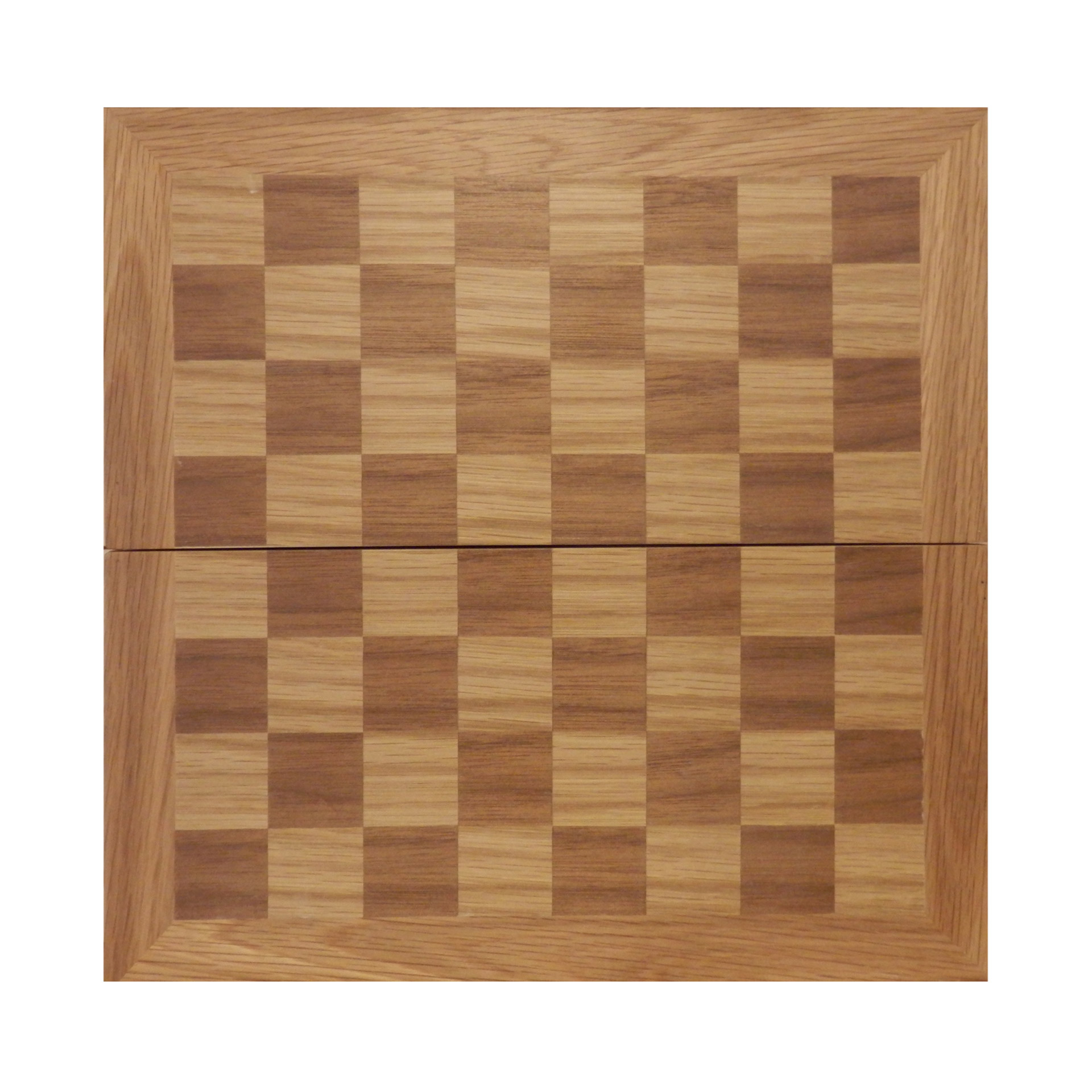
Next, the philosopher had the carpenter construct a board eight squares by eight squares, alternating black and white. He then requested an audience with the queen and her councilors.

As the philosopher showed the chess pieces and the board to the queen, he said to her, "This is war without bloodshed. It is a game, and I will show you how to play."

He then played the game with the queen, and the game was over when he captured her king. "Shah-mat," he said. Which means in the language of that country "the king is dead" — and that is why, in English, we say "checkmate" at the end of the game.

When the queen heard these words, she gazed at the philosopher in astonishment. "My son is dead," she said.

The philosopher nodded solemnly in reply.

The queen then told the doorkeeper to let the people come in to comfort her. And she wept.

Then, after she was done weeping, she said to the philosopher, "How may I reward you? Ask me for whatever you want."

He replied, "I ask a gift of grain; use the board to measure it out. On the first square, put one grain. On the next square, put two. Then on the next square, put four. And on the next, eight. Continue until you reach the final square."

The queen said, "One grain, two grains, four grains, and so on: that is too small a reward for such a fine invention. Please let me give you something greater. I will give you jewels. I will give you gold. Ask me for anything you desire."

The philosopher insisted that all he wanted was wheat: one grain, two grains, four grains, eight grains, and so on.

The queen began to measure out the grains: one grain, two grains, four grains, eight grains, sixteen, thirty-two, sixty-four, and then one hundred and twenty-eight grains at the end of the first row.

Then the second row: two hundred and fifty-six, then five hundred and twelve, then over a thousand. Then over two thousand, four thousand, eight thousand, sixteen thousand. Thirty-two thousand.

Astonished, the queen summoned the court mathematician. He explained that by the middle of the third row, the queen would need over a million grains for a single square.

Over a billion grains for a square in the fourth row.

Beyond the fourth row, the numbers had no words.

Not all the wheat in all the country could satisfy what the philosopher had asked of her. Not even all the wheat in all the world would be enough.

(If the queen had possessed an electronic calculator, she could figure out the so-called chess number for herself, and the quintillions of grains of wheat would weigh 75 billion tons.)

When the philosopher saw that the queen understood, he smiled. "Do not fear, my queen," he said; "I have no need of a reward. Your thanks are reward enough."

And so the game of chess was invented.


CHAIN: 2 - 4 - 8 - 16 - 32 - 64 - 128 - 256 ... and so on.

May 31. Story of the Day: The Grasshopper and the Ant

This story comes from Georgian Folk Tales by Marjory Wardrop, and these are folktales from the people of Georgia in Central Asia (not the state in the U.S.A.). You can find out more about the Georgians at Wikipedia. Specifically, the story here comes from the Gurian region of western Georgia.

This story is classified as ATU 2021: Rooster and Hen, although the main characters are a grasshopper and an ant. There is a famous Aesop's fable which features a grasshopper and an ant; this is not that story. Instead, this grasshopper and this ant are comrades, although they are a mismatched pair, as you will see.

Want more? Click here for previous Stories-of-the-Day.


THE GRASSHOPPER AND THE ANT


The grasshopper and the ant became friends and entered into a compact of brotherhood, promising never to separate. They then set out on a journey, forgetful of the proverb that 'footman and horseman can never be comrades.'

Of the truth of this they had a proof on the very first day of their travels for, chancing to come to a brook which they had to ford, the grasshopper jumped over, while the poor ant was carried away by the stream.

The grasshopper thought for a moment how he could save his drowning companionand then cried: 'Catch hold of something, and I shall run and get help.'

The bright idea struck him of applying to the sow for one of her bristles to which the ant could attach herself while he pulled her out of the water.

The sow answered: 'Brother grasshopper, you know the proverb, "hand washes hand" — for three days I have eaten nothing, and am I to let people pull bristles out of me for nothing? Feed me with acorns, and then you can have as many bristles as you like.'

The grasshopper hurried off to the oak and said: 'Oak, oak, give me acorns; I give the acorns to the sow; the sow gives me a bristle, and with the bristle I save my drowning comrade.'

The oak answered: 'Those thievish jays give me no rest; they pull off my acorns — keep them off.'

The grasshopper ran to the jays, and said: 'Jays! Leave the oak, and the oak will give me acorns; the acorns I give to the sow, the sow gives me a bristle, and with the bristle I save my drowning comrade.'

The jays answered: 'The kites pursue us; go and drive them off.'

The grasshopper ran to the kites, and said: 'Kites! Leave the jays, and the jays will leave the oak; the oak will give me acorns, the acorns I give to the sow, the sow gives me a bristle, and with the bristle I save my drowning comrade.'

The kites answered: 'We are hungry; bring us chickens.'

The grasshopper ran to the hen, and said: 'Hen, give me chickens. The chickens I shall give to the kites, the kites leave the jays, the jays leave the oak, the oak gives acorns, the acorns I give to the sow, the sow gives me a bristle, and with the bristle I save my drowning comrade.'

The hen replied: 'Feed me with millet.'

The grasshopper hastened to the barn: 'Barn, give me millet; the millet I give to the hen, the hen gives me chickens, the chickens I give to the kites, the kites leave the jays, the jays leave the oak, the oak gives acorns, the acorns I give to the sow, the sow gives me a bristle, and with the bristle I save my drowning comrade.'

The barn replied: 'The rats have the mastery over me; they gnaw me on every side — send them away.'

The grasshopper ran to the rats: 'Rats! Go away from the barn, and the barn will give me millet; the millet I give to the hen, the hen gives me chickens, the chickens I give to the kites, the kites leave the jays, the jays leave the oak, the oak gives acorns, the acorns I give to the sow, the sow gives me a bristle, and with the bristle I save my drowning friend.'

The rats replied: 'The cats give us no peace; send them away.'

The grasshopper went to the cats: 'Cats! Go away from the rats, and the rats will leave the barn, the barn will give millet, the millet I give to the hen, the hen gives me chickens, the chickens I give to the kites, the kites leave the jays, the jays leave the oak, the oak gives acorns, the acorns I give to the sow, the sow gives me a bristle, and with this bristle I shall save my drowning comrade.'

The cats replied: 'Feed us with milk.'

The grasshopper ran to the cow: 'Cow! Give me milk; the milk I shall give to the cats, the cats will leave the rats alone, the rats will leave the barn, the barn will give millet, the millet I give to the hen, the hen gives me chickens, the chickens I give to the kites, the kites leave the jays, the jays leave the oak, the oak gives acorns, the acorns I give to the sow, the sow gives me a bristle, and with this bristle I shall save my drowning comrade.'

The cow replied: 'Feed me with grass.'

The grasshopper applied to the earth, and said: 'O earth! Give me grass; the grass I shall give to the cow, the cow will give me milk, the milk I shall give to the cats, then the cats will leave the rats alone, and the rats will leave the barn, the barn will give me millet, the millet I shall give to the hen, the hen will give me chickens, the chickens I shall give to the kites, then the kites will leave the jays, and the jays will leave the oak, the oak will give me acorns, the acorns I shall give to the sow, the sow will give me a bristle, and with this bristle I shall save my drowning friend.'

The earth gave the grass . . . and finally the grasshopper obtained the bristle, and hastened with it to his drowning friend, but, to his astonishment, the ant was quite dead when he pulled him out.

This story teaches that help is only valuable when it is given in time, that the earth alone refuses not to yield her gifts to him that asks, and that all other things exist only by reciprocal services.


CHAIN: bristle - sow/acorns - oak - jays - kites - chickens - hen/millet - barn - rats - cats/milk - cow/grass - earth