Showing posts with label paraphrased. Show all posts

October 26. Story of the Day: Cold May Night

I read this story in Folktales Told around the World by Richard M. Dorson (pp. 6-9), who took the story from Folktales of Ireland by Sean O'Sullivan, and his source in turn is Micheal O Coileain, aged 70, as recorded in 1946. For ancient testimony about this story, see The Adventures of Leithin by Douglas Hyde in the Celtic Review 10 (online at Hathi).

The story is set on the island off Achill, which is the largest of the "Irish Isles" off the Mayo coast; you can read more at Wikipedia. Old May night refers to the night of May 11, which is to say it is the old May 1 (Beltane) in the new style calendar following 1750.

The story is classified as ATU 1927.

The version below is a paraphrase of the story in my own words. I have emphasized the formulaic/cumulative features of the story in my version. I took the detail of the salmon's blood from the ATU summary (in other respects, I followed this story, which is quite different from the ATU summary with the crow-eagle framework).

Looking for more stories? Click here for previous Stories-of-the-Day.


The Cold May Night
(retold by Laura Gibbs)


There are cold nights, and colder nights, and the coldest night of all happened long, long ago on Old May Night. Who remembers the coldest night? Only the oldest animals can remember the coldest night. The Old Crow of Achill Island is one of them. But he was younger then, and stronger. Now the cold bothers him. 

One cold night not so long ago the Old Crow of the Island sought shelter in an eagle's nest that he found high atop the tallest tree. The Eagle was away hunting, and there was a hungry chick awaiting her return. The Crow killed the chick and took its place, settling himself down deep into the nest.

Not long after, the Eagle returned with food for her chick. In the dark, she did not notice that it was the Crow instead of her chick who took the food and ate it hungrily. She then settled down into the nest herself, complaining that she had never felt a colder night. 

The Crow kept quiet. 

Yet as the Eagle went on and on and on and on about the cold, the Crow could not contain himself and grumbled, "I've known colder."

"What are you talking about? You hatched only a few weeks ago!"

"Oh, there was a colder night. It was on Old May Night," the Crow replied.

"How would a young chick like yourself know anything about that?" retorted the Eagle.

They argued until dawn. Finally the Crow said to the Eagle, "If you don't believe me, go ask the Blackbird of the Forge."

So the Eagle flew off to question the Blackbird of the Forge. "Listen," said the Eagle, "I cannot remember a colder night than last night, but my chick tells me that there was an Old May Night that was colder still. He's only a few weeks old himself, so I can hardly believe him, but he told me to come ask you. And here I am."

The Blackbird of the Forge thought for a moment and then replied, "Last night was the coldest night that I have ever known, and I have been alive a very long time. Do you see this iron rod which is my perch? Every seven years, I rub my beak against the rod. It used to be many inches thick, but now it is so thin that if I rub my beak on it just one more time, it will break; that is how long I have perched here, and I have never known a colder night than last night. But if you don't believe me, go ask the Bull in the Field."

The Eagle thanked the Blackbird of the Forge and flew off to question the Bull in the Field. "Listen," said the Eagle, "I cannot remember a colder night than last night, but my chick tells me that there was an Old May Night that was colder still. He's only a few weeks old himself, so I can hardly believe him, but he told me to go ask the Blackbird of the Forge. The Blackbird does not remember a colder night than last night, but she told me to come ask you. And here I am."

The Bull of the Field thought for a moment and then replied, "Last night was the coldest night that I have ever known, and I have been alive a very long time. Do you see the fence which surrounds this field? It is made up of my horns. Every  year, I shed my horns, and when I shed my two horns this year, the fence around the field will be complete; that is how long I have dwelled here, and I have never known a colder night than last night. But if you don't believe me, go ask the Blind Salmon of the Waterfall."

The Eagle thanked the Bull in the Field and flew off to question the Blind Salmon of the Waterfall. "Listen," said the Eagle, "I cannot remember a colder night than last night, but my chick tells me that there was an Old May Night that was colder still. He's only a few weeks old himself, so I can hardly believe him, but he told me to go ask the Blackbird of the Forge. The Blackbird does not remember a colder night than last night, but she told me to go ask the Bull in the Field. The Bull does not remember a colder night than last night, but he told me to come ask you. And here I am."

The Blind Salmon of the Waterfall thought for a moment and then replied, "Yes, there was a night that was colder than last night. It was on Old May Night, many years ago. I was leaping about just trying to keep warm when the water froze right under me and I landed on the ice. Around dawn, the Old Crow flew by, and he saw me there on the ice. He swooped down and started pecking out my eye. Luckily for me, the blood coming out of my eye warmed the ice beneath me, and I was able to escape back into the water. That's how I became blind in that eye, and that's also how I know it must have been the Old Crow of the Island, and not your chick, who spent last night in your nest."

"No!" screamed the Eagle. She rushed back to her nest, but it was empty. Her chick was gone. So was the Old Crow.

And there has never been a night as cold again as that Old May Night of long ago.


October 17. Story of the Day: The Refrigerator

I could not resist including this wonderful bit of "Internet lore" here as part of the project. Especially if you have never seen this particular elephant-in-the-refrigerator joke before, you are in for a treat. And Wikipedia even has an article about elephant jokes for more amusement, including more elephants-in-the-refrigerator.

No, it's not a chain tale. But I'm not going to anything more about its "chain-like" quality lest I give too much away.

You will find many versions online, but they all go more or less something like the paraphrase that I have provided below in my own words.

Looking for more stories? Click here for previous Stories-of-the-Day.


THE REFRIGERATOR

1. How do you put a giraffe into a refrigerator?

Correct Answer: Open the refrigerator, put in the giraffe, and then close the door. This question tests whether you tend to do simple things in an overly complicated way.


~ ~ ~

2. How do you put an elephant into a refrigerator?

Did you say, Open the refrigerator, put in the elephant, and close the refrigerator?

Wrong Answer. The refrigerator has a giraffe in it already.

Correct Answer: Open the refrigerator, take out the giraffe, put in the elephant and close the door. This tests your ability to think through the repercussions of your previous actions.

~ ~ ~

3. The lion is hosting an animal conference. All the animals attend.... except one. Which animal does not attend?

Correct Answer: The elephant. The elephant is in the refrigerator. You just put him in there. This tests your memory.

~ ~ ~

Okay, even if you did not answer the first three questions correctly, you still have one more chance to show your true abilities.

4. There is a river you must cross but it is used by crocodiles, and you do not have a boat. How do you manage it?

Correct Answer: You jump into the river and swim across. Have you not been listening? All the crocodiles are attending the Animal Meeting. This tests whether you learn quickly from your mistakes.


August 13. Story of the Day: The Little Ant

This story is from Folktales of Mexico by Americo Paredes. The story was told by Petra Guzman in Barron, Mexico in 1948. I have provided a paraphrase of the story in my own words below, with an emphasis on the formulaic structure of this cumulative tale.

This is an example of ATU 2031. Stronger and Strongest.

Looking for more stories? Click here for previous Stories-of-the-Day.


THE LITTLE ANT
(retold by Laura Gibbs)

(ant)


One winter, the ant went walking, and she broke her leg in the snow.

She went to the judge and said, "I want to sue the snow for breaking my leg."

The judge summoned the snow. "Snow, you think you are so high and mighty: I charge you with breaking the ant's leg!"

The snow replied, "I am not so high and mighty. The sun is the one who is high and mighty because it melts me."

The judge summoned the sun. "Sun, you think you are so high and mighty: I charge you with melting the snow that broke the ant's leg!"

The sun replied, "I am not so high and mighty. The cloud is the one who is high and mighty because it hides me."

The judge summoned the cloud. "Cloud, you think you are so high and mighty: I charge you with hiding the sun that melted the snow that broke the ant's leg!"

The cloud replied, "I am not so high and mighty. The wind is the one who is high and mighty because it pushes me."

The judge summoned the wind. "Wind, you think you are so high and mighty: I charge you with pushing the cloud that hid the sun that melted the snow that broke the ant's leg!"

The wind replied, "I am not so high and mighty. The wall is the one who is high and mighty because it stops me."

The judge summoned the wall. "Wall, you think you are so high and mighty: I charge you with stopping the wind that pushed the cloud that hid the sun that melted the snow that broke the ant's leg!"

The wall replied, "I am not so high and mighty. The mouse is the one who is high and mighty because he gnaws me."

The judge summoned the mouse. "Mouse, you think you are so high and mighty: I charge you with gnawing the wall that stopped the wind that pushed the cloud that hid the sun that melted the snow that broke the ant's leg!"

The mouse replied, "I am not so high and mighty. The cat is the one who is high and mighty because she eats me."

The judge summoned the cat. "Cat, you think you are so high and mighty: I charge you with eating the mouse who gnawed the wall that stopped the wind that pushed the cloud that hid the sun that melted the snow that broke the ant's leg!"

The cat replied, "I am not so high and mighty. The dog is the one who is high and mighty because he chases me."

The judge summoned the dog. "Dog, you think you are so high and mighty: I charge you with chasing the cat who ate the mouse who gnawed the wall that stopped the wind that pushed the cloud that hid the sun that melted the snow that broke the ant's leg!"

The dog replied, "I am not so high and mighty. The stick is the one who is high and mighty because it beats me."

The judge summoned the stick. "Stick, you think you are so high and mighty: I charge you with beating the dog who chased the cat who ate the mouse who gnawed the wall that stopped the wind that pushed the cloud that hid the sun that melted the snow that broke the ant's leg!"

The stick replied, "I am not so high and mighty. The fire is the one who is high and mighty because it burns me."

The judge summoned the fire. "Fire, you think you are so high and mighty: I charge you with burning the stick that beat the dog who chased the cat who ate the mouse who gnawed the wall that stopped the wind that pushed the cloud that hid the sun that melted the snow that broke the ant's leg!"

The fire replied, "I am not so high and mighty. The water is the one who is high and mighty because it extinguishes me."

The judge summoned the water. "Water, you think you are so high and mighty: I charge you with extinguishes the fire that burnt the stick that beat the dog who chased the cat who ate the mouse who gnawed the wall that stopped the wind that pushed the cloud that hid the sun that melted the snow that broke the ant's leg!"

The water replied, "I am not so high and mighty. The cow is the one who is high and mighty because she drinks me."

The judge summoned the cow. "Cow, you think you are so high and mighty: I charge you with drinking the water that extinguished the fire that burnt the stick that beat the dog who chased the cat who ate the mouse who gnawed the wall that stopped the wind that pushed the cloud that hid the sun that melted the snow that broke the ant's leg!"

The cow replied, "I am not so high and mighty. The knife is the one who is high and mighty because it kills me."

The judge summoned the knife. "Knife, you think you are so high and mighty: I charge you with killing the cow who drank the water that extinguished the fire that burnt the stick that beat the dog who chased the cat who ate the mouse who gnawed the wall that stopped the wind that pushed the cloud that hid the sun that melted the snow that broke the ant's leg!"

The knife replied, "I am not so high and mighty. The blacksmith is the one who is high and mighty because he forged me."

The judge summoned the blacksmith. "Blacksmith, you think you are so high and mighty: I charge you with forging the knife that killed the cow who drank the water that extinguished the fire that burnt the stick that beat the dog who chased the cat who ate the mouse who gnawed the wall that stopped the wind that pushed the cloud that hid the sun that melted the snow that broke the ant's leg!"

The blacksmith replied, "I am not so high and mighty. God is the one who is high and mighty because he made me."

And there the trial ended because the judge could not summon God to his court.


July 6. Story of the Day: Ram in the Chile Patch

This story is from Folktales of Mexico by Americo Paredes. The story was collected from Maria del Refugio Gonzalez of Tepatitlan in Jalisco. I have paraphrased the story in my own words, emphasizing the formulaic elements.

The story is an example of ATU 2030. The Old Woman and her Pig, but instead of a pig who won't jump over a stile, this is a ram who won't get out of the chile patch. Another distinctive feature is the dialogue at the end with the final character in the chain.

The version here is not cumulative, although it would be easy to make a cumulative version, having either the little boy or his animal helpers recite the chain of failures before the final success.

Looking for more stories? Click here for previous Stories-of-the-Day.


THE RAM IN THE CHILE PATCH
(retold by Laura Gibbs)


There was once a boy, and he had a patch of chile peppers; he earned his living selling chiles.

Then one day a ram got into the little boy's chile patch and started eating the chiles. So the boy yelled, "Ram, hey ram, get out of my chile patch."

"You rude boy!" replied the ram. "I'm not going anywhere. I'm going to stay right here and eat all the chiles."

The little boy tried to push the ram out of the chile patch, but the ram pushed right back. The boy pushed the ram again, and this time the ram kicked the boy and knocked him down. The little boy got up and then ran out of the chile patch, crying.

A cow saw him crying and asked, "What the matter, little man?"

The boy told the cow, "A ram knocked me down."

"Why did he do that?"

"Because I tried to make him leave the chile patch. The ram's in the chile patch, and I can't make him go out!"

The cow then went into the chile patch and mooed, "Ram, hey ram, you need to get out of that boy's chile patch."

"You big fat cow!" replied the ram. "I'm not going anywhere. I'm going to stay right here and eat all the chiles."

The cow used her horns to try to push the ram out, but the ram pushed back and drove that cow right out of the boy's chile patch.

Meanwhile, the boy kept on crying because the ram was eating all the chiles in his chile patch.

The dog saw what happened, so he went into the chile patch and barked, "Ram, hey ram, you need to get out of that boy's chile patch."

"You worthless dog!" replied the ram. "I'm not going anywhere. I'm going to stay right here and eat all the chiles."

The dog snarled at the ram to try to make him leave, but the ram used his horns to push that dog right out of the boy's chile patch.

Meanwhile, the boy kept on crying because the ram was eating all the chiles in his chile patch.

The rooster saw what happened, so he went into the chile patch and crowed, "Ram, hey ram, you need to get out of that boy's chile patch."

"You noisy rooster!" replied the ram. "I'm not going anywhere. I'm going to stay right here and eat all the chiles."

The rooster pecked the ram to try to make him leave, but the ram used his hooves to push that rooster right out of the boy's chile patch.

Meanwhile, the boy kept on crying because the ram was eating all the chiles in his chile patch.

The burro saw what was happening, so he went into the chile patch and brayed, "Ram, hey ram, you need to get out of that boy's chile patch."

"You ugly burro!" replied the ram. "I'm not going anywhere. I'm going to stay right here and eat all the chiles."

The burro rushed at the ram to try to make him leave, but the ram pushed back and drove the burro right out of the boy's chile patch.

Meanwhile, the boy kept on crying because the ram was eating all the chiles in his chile patch.

Finally, a little ant came and saw what was happening. The boy said to the ant, "Ant, hey Ant, if you will get the ram out of the chile patch for me, I will give you lots of corn."

"How much corn?" asked the ant.

"A bushel of corn!" said the boy.

"Oh, that's too much," replied the ant.

"Half a bushel," said the boy.

"That's too much," replied the ant.

"A kilo of corn," said the boy.

"Still too much," replied the ant.

"A handful of corn," said the boy.

"That sounds good," said the ant.

The boy went away to grind the corn while the ant went into the chile patch. The ant didn't say anything; she just walked up to the ram, step by step by step. The ram didn't even see her. Then the ant crawled up one of the ram's legs, step by step by step. The ram didn't even feel her. And then the ant crawled right up to where she could sting the ram's butt. 

And as soon as the ant stings the ram, the ram jumps and runs, shouting, "Oh no, oh no, something stung me in the butt.  Oh nooooooo!"

And that is how the ant was able to drive the ram out of the boy's chile patch at last.


July 3. Story of the Day: Ant and Mouse

The story below is based on a folktale recorded in Folktales of Mexico by Americo Paredes. Paredes gives two versions of the story: PĂ©rez the Mouse "a" and "b" (pp. 188-192). They were both collected in Jalisco, Mexico. Version a comes from Maria Soledad Orozco of Capilla de Guadalupe; she was 15 years old at the time. Version b comes from Clemente Martin of Pegueros; he was 11 years old at the time and had learned the story from his father.

I have combined elements from both versions and then told the story in my own words below, emphasizing the formulaic structures.

This type of story is classified as ATU 2023. Little Ant Marries, the same type as the Iranian story from yesterday, The Sad Story of the Beetle, the Mouse, and the Ant.

Ready for more? Click here for previous Stories-of-the-Day.


THE ANT AND THE MOUSE
(retold by Laura Gibbs)

One day an ant was sweeping, and while she was sweeping she found a penny. With that penny, she bought a pretty ribbon. She put the pretty ribbon on her head, and then sat down in the doorway to see what might happen next.

The ox walked by and he said, "You look beautiful, my dear ant. Would you like to marry me?"

"I don't know," replied the ant. "Tell me what you say."

"I say mooooooo," replied the ox.

"Oh, you sound dreadful. I do not want to marry you." So the ox went away. 

The dog walked by next, and he said, "You look beautiful, my dear ant. Would you like to marry me?"

"I don't know," replied the ant. "Tell me what you say."

"I say bow-wow-wow," replied the dog.

"Oh, you sound dreadful. I do not want to marry you." So the dog went away. 

The mouse walked by next, and he said, "You look beautiful, my dear ant. Would you like to marry me?"

"I don't know," replied the ant. "Tell me what you say."

"I say eee-eee-eee," replied the mouse.

"Oh, you sound very sweet," declared the ant. "I want to marry you!"


The ant married the mouse, and they set up house together. 

One day the ant said to the mouse, "I'm going to church. Keep an eye on the stew pot on the stove. Use the big spoon to stir the stew, and that way you won't fall in."

But the mouse forgot to use the big spoon, and into the stew he fell.

The ant came back from church and she called, "Mouse, oh my mouse, let's eat our supper!" But the mouse didn't come.

The ant ate a bowl of stew. And she was still hungry, so she called, "Mouse, oh my mouse, let's eat our supper!" But the mouse didn't come.

The ate ate another bowl of stew. And she was still hungry, so she called, "Mouse, oh my mouse, let's eat our supper!" But the mouse didn't come.

And when she went to get a third bowl of stew, she found the mouse in the stew pot. He was dead.

The ant was sad, and she dyed her ribbon black. She put the mourning ribbon on her head, and then she went outside and climbed a tree.

The tree said to her, "Ant, my ant, why are you climbing a tree?"

The ant said, "The mouse fell into the pot of stew, and he died. So I am climbing a tree."

And then the tree said, "Then I will shed my leaves."

A bird came to make its nest in the tree. The bird said to the tree without leaves, "Tree, my tree, why did you shed your leaves?"

The tree said, "The mouse fell into the pot of stew, and he died. So the ant is climbing a tree, and I am shedding my leaves."

And then the bird said, "So I will shed my feathers."

The bird flew off and landed on an ox. The ox said to the bird without feathers, "Bird, my bird, why did you shed your feathers?"

The bird said, "The mouse fell into the pot of stew, and he died. So the ant is climbing a tree, the tree is shedding its leaves, and I am shedding my feathers."

Then the ox said, "So I will shed my horns."

The ox went to drink at the pond. The pond said to the ox without horns, "Ox, my ox, why did you shed your horns?"

The ox said, "The mouse fell into the pot of stew, and he died. So the ant is climbing a tree, the tree is shedding its leaves, the bird is shedding its feathers, and I am shedding my horns."

Then the pond said, "So I will dry up."

A girl came to draw water from the pond with a pitcher. The girl said to the pond without water, "Pond, my pond, why did you dry up?"

The pond said, "The mouse fell into the pot of stew, and he died. So the ant is climbing a tree, the tree is shedding its leaves, the bird is shedding its feathers, the ox is shedding its horns, and I am drying up."

Then the girl said, "So I will break my pitcher."

The girl went to her father the king. The king said to the girl with the broken pitcher, "Daughter, my daughter, why did you break your pitcher?"

The girl said, "The mouse fell into the pot of stew, and he died. So the ant is climbing a tree, the tree is shedding its leaves, the bird is shedding its feathers, the ox is shedding its horns, the pond is drying up, and I am breaking my pitcher."

Then the king said, "So I will put on yellow clothes."

The king went to his wife the queen. The queen said to the king who had put on yellow clothes, "Husband, my husband, why have you put on yellow clothes?"

The king said, "The mouse fell into the pot of stew, and he died. So the ant is climbing a tree, the tree is shedding its leaves, the bird is shedding its feathers, the ox is shedding its horns, the pond is drying up, our daughter is breaking her pitcher, and I am putting on yellow clothes."

Then the queen said, "So I will cut myself in half."

And she cut herself in half, and that ended the story.


June 12. Story of the Day: Invention of Chess

In the Aarne-Thompson-Uther (ATU) folktale classification system, the "formula tales" come last, with numbers 2000 and above, and those formula tales begin with "chains based on numbers, objects, animals, or names." And the first of those number chains is a legend about the origin of chess: ATU 2009: The Origin of Chess.

You can find out more about "the chess number" at Wikipedia in the article about Powers of Two and also in the article about the Wheat and Chessboard Problem. Carl Sagan tells the story of "The Persian Chessboard" in Billions & Billions: Thoughts on Life and Death at the Brink of the Millennium. You can also see a version of the story as told by the 9th-century historian al-Yaqubi in Murray's A History of Chess.

The story below is my own paraphrase of the story. I have combined elements from the two versions (mostly the al-Yaqubi version in Murray) to tell my version of the story in my own words... and if you are looking for other types of chain-tales, click here for previous Stories-of-the-Day.


THE INVENTION OF CHESS


Long ago, there was a queen. In the country of that queen, there was a rebellion, and the rebel leader killed the queen's son; he was the crown prince, the heir to the throne. The queen's councilors did not want to give this news to the queen. How could they tell her that the king-to-be was dead?

In desperation, they went to a philosopher and told him of their trouble. After thinking the matter over for three days and three nights, the philosopher said, "Bring me a carpenter, and supply him with two colors of wood: white and black." The philosopher then instructed the carpenter how to carve pieces from the wood: there was to be a black king and a white king; a black queen and a white queen; black knights, white knights; black pawns, white pawns, and so on. Yes, they were chess pieces! But no one had played the game of chess before. 

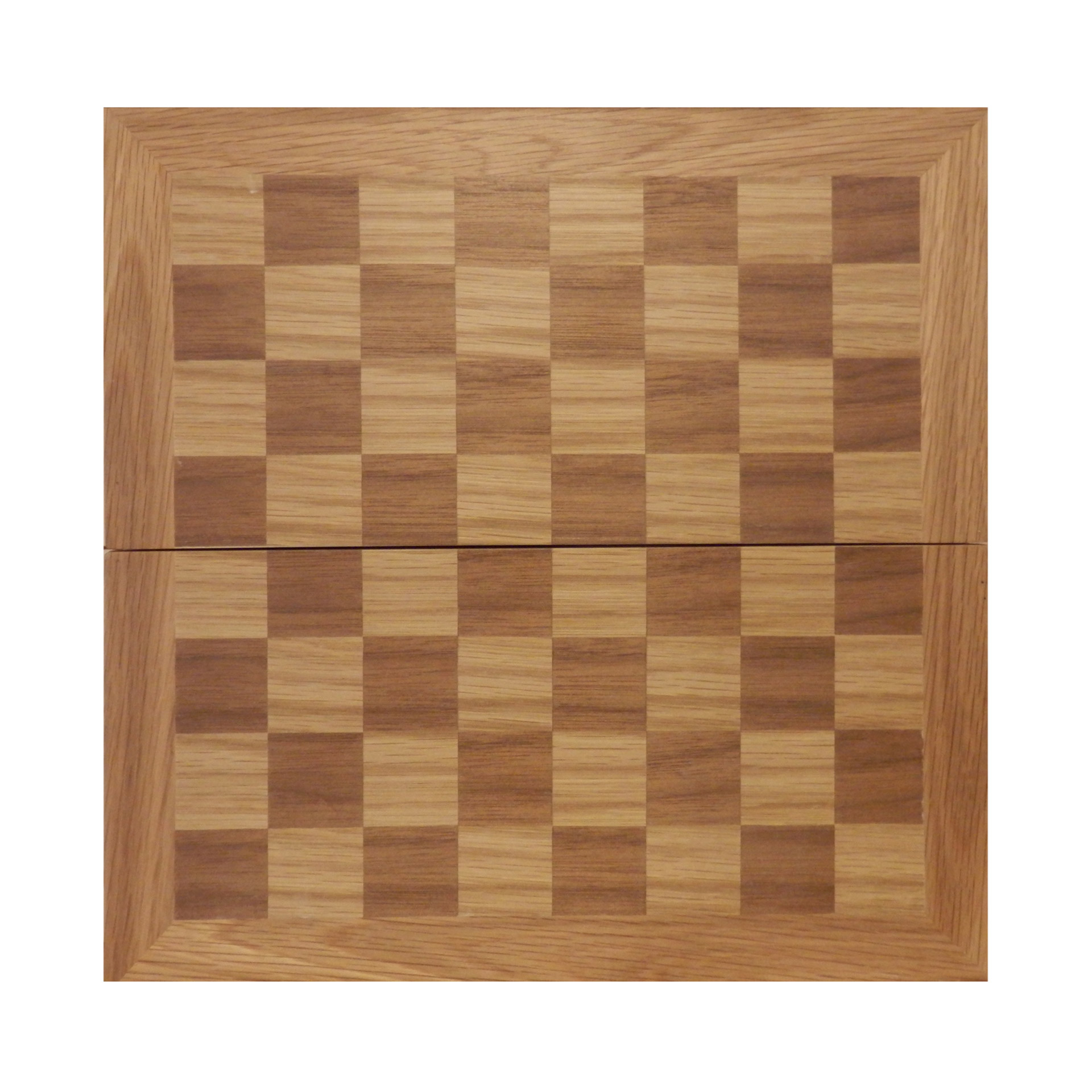
Next, the philosopher had the carpenter construct a board eight squares by eight squares, alternating black and white. He then requested an audience with the queen and her councilors.

As the philosopher showed the chess pieces and the board to the queen, he said to her, "This is war without bloodshed. It is a game, and I will show you how to play."

He then played the game with the queen, and the game was over when he captured her king. "Shah-mat," he said. Which means in the language of that country "the king is dead" — and that is why, in English, we say "checkmate" at the end of the game.

When the queen heard these words, she gazed at the philosopher in astonishment. "My son is dead," she said.

The philosopher nodded solemnly in reply.

The queen then told the doorkeeper to let the people come in to comfort her. And she wept.

Then, after she was done weeping, she said to the philosopher, "How may I reward you? Ask me for whatever you want."

He replied, "I ask a gift of grain; use the board to measure it out. On the first square, put one grain. On the next square, put two. Then on the next square, put four. And on the next, eight. Continue until you reach the final square."

The queen said, "One grain, two grains, four grains, and so on: that is too small a reward for such a fine invention. Please let me give you something greater. I will give you jewels. I will give you gold. Ask me for anything you desire."

The philosopher insisted that all he wanted was wheat: one grain, two grains, four grains, eight grains, and so on.

The queen began to measure out the grains: one grain, two grains, four grains, eight grains, sixteen, thirty-two, sixty-four, and then one hundred and twenty-eight grains at the end of the first row.

Then the second row: two hundred and fifty-six, then five hundred and twelve, then over a thousand. Then over two thousand, four thousand, eight thousand, sixteen thousand. Thirty-two thousand.

Astonished, the queen summoned the court mathematician. He explained that by the middle of the third row, the queen would need over a million grains for a single square.

Over a billion grains for a square in the fourth row.

Beyond the fourth row, the numbers had no words.

Not all the wheat in all the country could satisfy what the philosopher had asked of her. Not even all the wheat in all the world would be enough.

(If the queen had possessed an electronic calculator, she could figure out the so-called chess number for herself, and the quintillions of grains of wheat would weigh 75 billion tons.)

When the philosopher saw that the queen understood, he smiled. "Do not fear, my queen," he said; "I have no need of a reward. Your thanks are reward enough."

And so the game of chess was invented.


CHAIN: 2 - 4 - 8 - 16 - 32 - 64 - 128 - 256 ... and so on.